Wednesday, January 7, 2015

TEFL COURSE

TEFL COURSE


As a young adult, with your entire life ahead of you, career choices are like a smörgåsbord.  One such career choice is the  amazing opportunity to travel overseas, and teach english as a foreign language (TEFL) or as second language, since the demand for instruction at all levels by people who speak English  as their mother tongue is constantly and continually increasing. TEFL (pronounced 'teffle' or "tfel") - "Teaching English as a Foreign Language" (TEFL is a short introductory TEFL course that gets you a foot into the "Teaching English as a Foreign Language" (TEFLprofession and serves as a basic requirement. With a TEFL qualification you could travel to places like Korea, Indonesia, Thailand,  Vietnam, Thailand, Singapore, Malaysia, Taiwan,China and Japan among so many other to teach English as a foreign language (TEFLto their natives. However, it is not as simple as it sounds. Learning the language of your target country is beneficial if not essential and would place you in good stead with your prospective employers. 


CELTA CERTIFICATION

A CELTA certificate course gives you an opportunity for placement internationally, in the more recognized schools in the European countries like Spain, Italy, Poland, France Germany, Greece, some South American countries like Costa Rica, Argentina,  Chile, Venezuela, Colombia, Peru, Ecuador, Bolivia, Ecuador, etc and the UAE countries like, Libya, Egypt, Saudi Arabia, Oman, etc.


A guide to the TEFL profession.

The popular television learn to speak English, series Mind your Language is very reminiscent of what happens in a TEFL classroom. However the series was cancelled by the original program director  who considered it stereotypically offensive. Stereotyping is something that TEFL teachers needs to guard against and is probably the quickest and easiest way to become disliked in the profession, which would end your career even before it takes off. However, not every aspiring TEFL teacher is suitable  for  "Teaching English as a Foreign Language" (TEFL). Self evaluation of your motives  is by far the best method to determine whether or not you are cut out "Teach English as a Foreign Language" TEFL in a foreign country.


Monday, January 5, 2015

TEFL CERTIFICATION


TEFL, TESOL,  CELTA, DELTA, ESOL,

The English language is the modern day sequel of colonialism which has come to dominate the world. It is estimated that more than 500 million people speak English throughout the world today and the need to learn English by non-English speakers are ever on the increase. Thus, "Teaching English as a Foreign Language" (TEFL) has become very popular of late and many educational organisations jumped on the band wagon to do just that. Becoming TEFL certified entitles you to teach English abroad and there is a number of TEFL courses to choose from, both online and offline but not all of them are internationally recognised. Some TEFL courses are more of an introduction to the teaching industry than a qualification to teach, and are often less than 100 hours in duration. 

Whereas CELTA courses average about 120 hours and often include an additional 80 hours of practical. The most recognised TEFL certification is therefore CELTA (Certificate in English Language Teaching to Adults) which is backed by Cambridge University ESOL examinations and certification and enables you to teach English overseas. Several educational organisations are Cambridge CELTA Course affiliated and there are also several that are not. So when choosing a teaching certification, make certain it is internationally recognised. CELTA is a highly regarded training course, accepted by thousands of language schools, universities and educational organisations internationally, hence very sought after. 


But with names like IELTS, ESOL, TEFL, TESOL,  CELTA, DELTA, EFL, ESL, CTEFLA, TEFLA, FCE, CAE, CPE, CTEL, ARELS, TOEFL, UCLES, RSA/UCLES and  RSA /Cambridge Certificate, how do you know which course is best for you. To clear up some ambiguity, IELTS is the acronym for  "International English Language Testing System". It is the world's leading English test of listening, reading, writing and speaking endorsed by the British Council and also the only English language test accepted for immigration purposes by all countries that require one and should be taken by all non-native English speakers before attempting to get a TEFL / TESOL accreditation.


TEFL and TESOL are both acronyms for the same exact identical thing. TEFL is the acronym for "Teaching English as a Foreign Language" originated in the UK, whereas TESOL is the acronym  "Teaching English to Speakers of Other Languages" originated in the USA.  Either  course is a little more of an introduction to the teaching industry and neither require testing through Language Assessment Authorised Centres like Cambridge or Oxford Universities. Yet several educational organisations  claim it to be rated equivalent to a CELTA certificate even though it is not Internationally recognised.

ESOL is a certification for anyone who is a non-native speaker of the English language and who wish to demonstrate their ability to communicate in English. Several English-speaking universities accept an ESOL certification as evidence of language proficiency for entry to their courses. It is also a certifification to obtain a UK visa.

RSA/ Cambridge Certificate in English Language Teaching to Adults  (CELTA), is a teaching practice training course, which differentiates it from both TEFL and TESOL backed by an Internationally recognised Certificate.

Diploma in English Language  Teaching to Adults (DELTA) or  Diploma in Teaching English to Speakers of Other Languages, which is more geared towards more advanced teachers since it is a higher qualification than CELTA.

English as a second Language (ESL) is an advanced certification for graduates who already attained a CELTA certificate. With this certification you can cover the entire spectrum of the English Language and teach business executives to speak  English very well. English as a foreign language (EFL) is essentially ESL and concentrates on fluency of speech, good use of vocabulary which are often journalists and foreign correspondents.


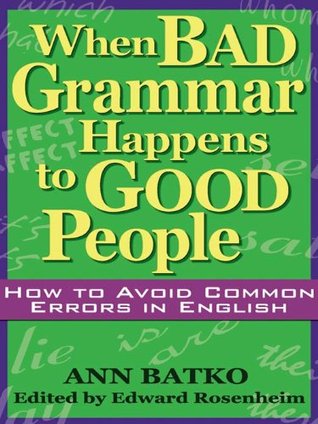
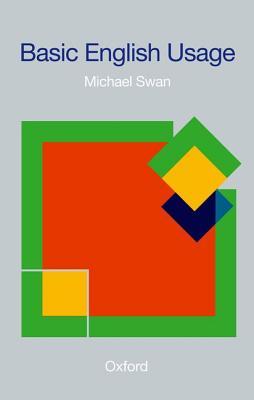
Getting yourself geared up to Teach English as a Foreign Language (TEFL)doesn't mean require a University degree but rather a good knowledge of vocabulary and books like "WordPlay" , "When bad grammar happens to good people" by Ann Batko, "The Complete Idiot's Guide to Grammar and Style" by Laurie E. Rozakis, "Advanced English C.E.A.", "Cambridge - English Grammar In Use", "Basic English Language usage" as well as "Taboos and Issues"  by Richard MacAndrew & Ron Martinez can be very useful.